

After 110 million years, a forgotten winged beast emerged from beneath a pile of ancient vomit. Now, a riddle that formerly baffled science has been revealed by its comb-toothed jaws.
In 110 million years, imagine a scientist finding something new in your puke. That is exactly what happened when scientists discovered a novel kind of flying reptile in the vomit of fossilized dinosaurs. The species is known as Bakiribu waridza, which translates to “comb-like mouth” in the Kariri language. The area of Brazil where the fossil was discovered is home to the indigenous Kariri people.
This remarkable discovery, according to scientists, will aid in understanding the evolutionary history of these prehistoric flyers. The name is appropriate because, like contemporary baleen whales, this pterosaur had jaws with long, bristle-like teeth that were probably employed to filter small organisms from water.
An Odd Lump That Turned Everything Around
The finding started when researchers discovered the remnants of four fish and the bones of two creatures inside a hard, concrete-like material. After examining the material more closely, Brazilian paleontologists discovered that it was regurgitate, or, to put it simply, fossilized vomit.
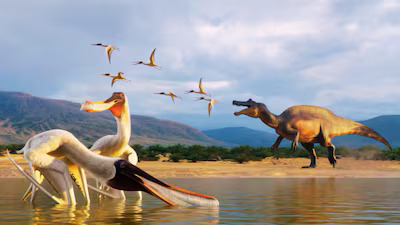
A predator may have tried to chew the pterosaur because several of its bones were fractured. Because the pterosaur’s comb-shaped jaws were tough to digest, researchers came to the conclusion that the predator most likely ingested the pterosaur first, followed by the fish, before throwing up a portion of the meal. Although a spinosaurid is the primary possibility, the dinosaur in question has not been identified. These predators were known to consume mostly fish and occasionally pterosaurs, although they were not as frightening as the Hollywood-style T. rex.
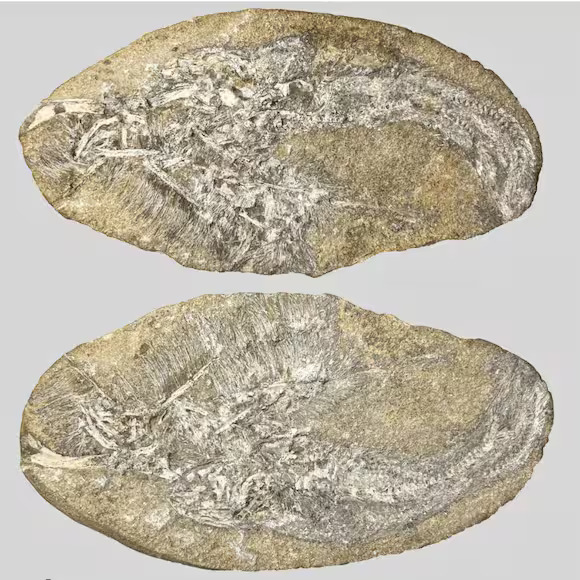
This discovery is especially significant because Bakiribu waridza is the first known filter-feeding pterosaur from Brazil. Its unusual mix of traits provides valuable clues about the evolution of these remarkable flying reptiles.
The research has been documented in the journal Scientific Reports.