


Viral Claim Raises Questions Over Energy Drink Safety
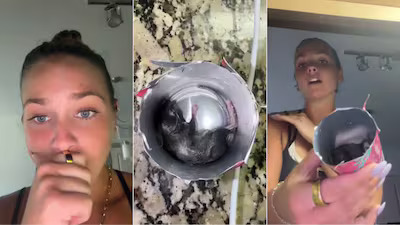
A routine drink turned into a disturbing experience for a woman who claims she discovered a mouse inside her energy drink can.
According to reports, she had consumed nearly half of her Alani energy drink when she felt something unusual touch her lips. Upon checking, she allegedly found a mouse inside the can. The incident has since gone viral on social media, triggering widespread reactions, with many users expressing shock and raising concerns about the safety and hygiene of canned beverages.
A woman has gone viral after claiming she discovered a mouse inside her energy drink can after consuming nearly half of it. According to her account, she initially assumed the object that touched her lips was ice or carbonation, but upon checking the can, she allegedly found a mouse floating inside. She later shared a video online showing the animal lodged within the can, sparking widespread attention.
The incident, which surfaced on social media platform X, has quickly become a major talking point, with users debating the authenticity of the claim and raising concerns over the safety of canned beverages. Online reactions have ranged from shock to skepticism, with some users making light of the situation, while others warned of potential health risks and legal consequences if the claim proves to be true.
The viral post has reignited discussions around quality control, food safety standards, and consumer trust in packaged drinks.
The incident triggered a flood of reactions online, with users responding almost instantly. While some expressed concern and said they would avoid drinking from cans altogether, others made light of the situation with jokes about “extra protein” and “limited edition flavours.” However, a large number of users questioned how such an incident could occur in the first place.
At the same time, scepticism also emerged, with several users doubting the authenticity of the viral video. Some claimed the footage appeared staged, arguing that the mouse did not look decomposed and suggesting it may have been placed inside the can deliberately. Others pointed out that high-speed manufacturing processes in beverage factories make such contamination unlikely, further fueling debate over the claim’s credibility.